

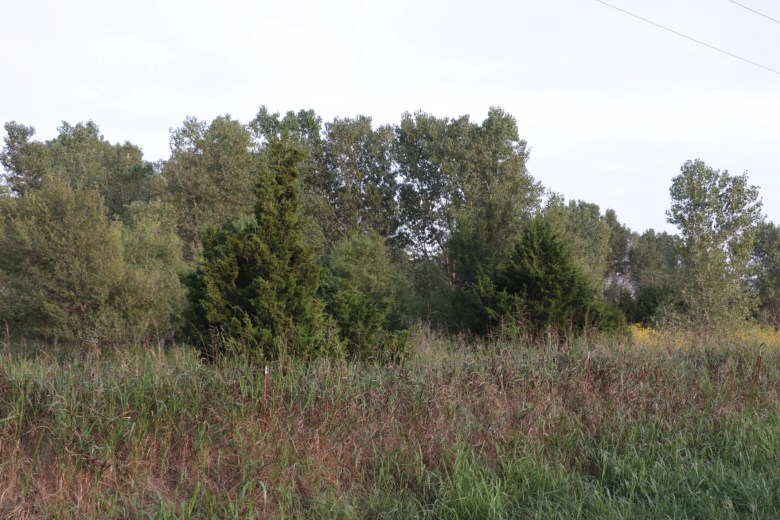
As Christmas draws closer, evergreen trees are a happy sight for many, including ticks. There’s new research connecting the eastern redcedar to helping spread another invasive species, the lone star tick.
While eastern redcedars continue to branch out on the state’s grasslands, so are ticks. Oklahoma State University researchers say it’s not a coincidence.
Estimates show eastern redcedars consume about 300,000 acres of Oklahoma land each year, slurping up billions of gallons of water and generally being a land-management nightmare in the process. Now, a study links woody plant encroachment and ticks, specifically the lone star tick.
The creepy crawlies carry a disease that can cause people to develop a red meat allergy. Bruce Noden, an OSU entomology professor, was one of the researchers who conducted the study, according to a press release.
“I was talking to an agricultural producer in western Oklahoma, and I asked him where he would find ticks on his property, and he said, ‘Everybody knows they’re down in the cedars,’” Noden said in the release. “It was common knowledge among cattle producers, but no one had put some science behind it yet.”
The researchers found that redcedars make a humid habitat under and around the trees for the ticks to remain alive until attaching to wildlife. This is the case in the even hotter, drier areas of the state, where there’s little humidity, which the tick needs to survive.
Because the study shows the number of ticks increases shortly after encroachment, it suggests the best way to prevent exposure to ticks in grasslands is to halt the spread of eastern red cedars before it starts.
“In addition to supporting pathogen-infected ticks, we have also found that most of the West Nile Virus-infected mosquitoes that we’ve collected have been found in cedar, so that’s another disease angle, which makes sense because the climate created by the trees would also be hospitable for mosquitoes,” Noden said in the release.
This article was originally published by KOSU You can see the original story here.