


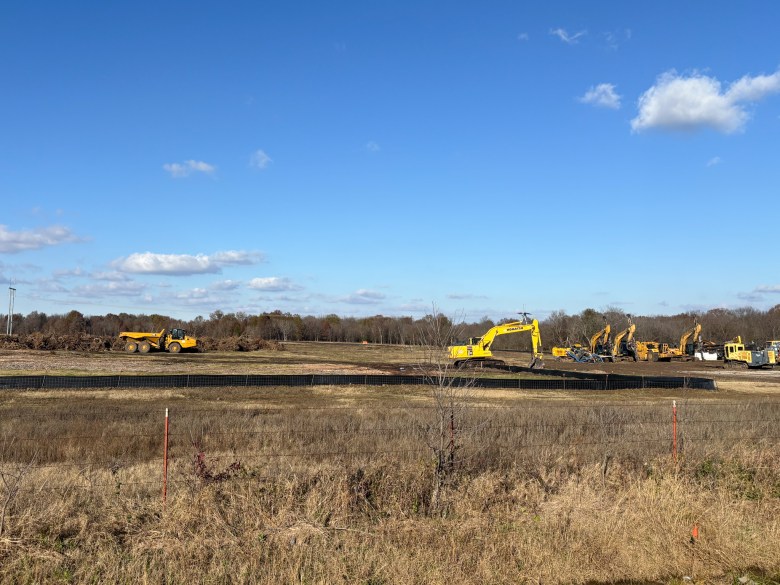
Down the street from Jeffrey Hill’s home used to be a wooded area full of trees and grass where he grew up riding dirt bikes with his friends. Years later, after moving his family back near his childhood home, he took his 8-year-old son mushroom hunting in the same area.
But all that changed when data center developer Beale Infrastructure moved in with a mission: to build Project Clydesdale near East 76th Street North and North Sheridan Road.
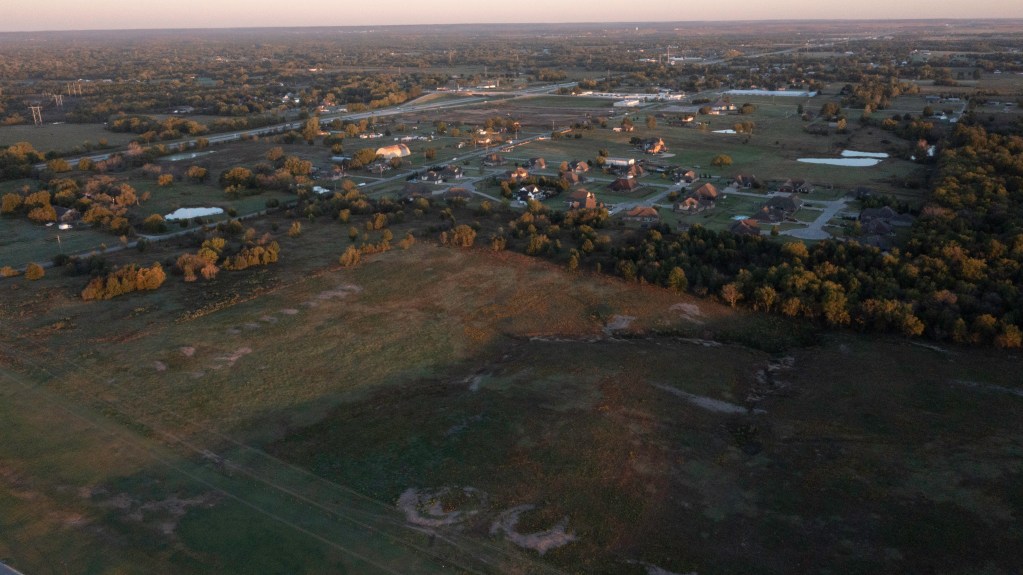
When the wooded area was demolished over the summer, Hill explained to his son what was happening.
“It used to be cool. We used to go out there and shoot BB guns and do goofy stuff looking for mushrooms,” Hill said. “He goes by it every day and he realizes, all the trees where we go look for mushrooms, it is just dirt now. And I explained to him, they tore it all down, it is all gone. They are going to build a data center there.”
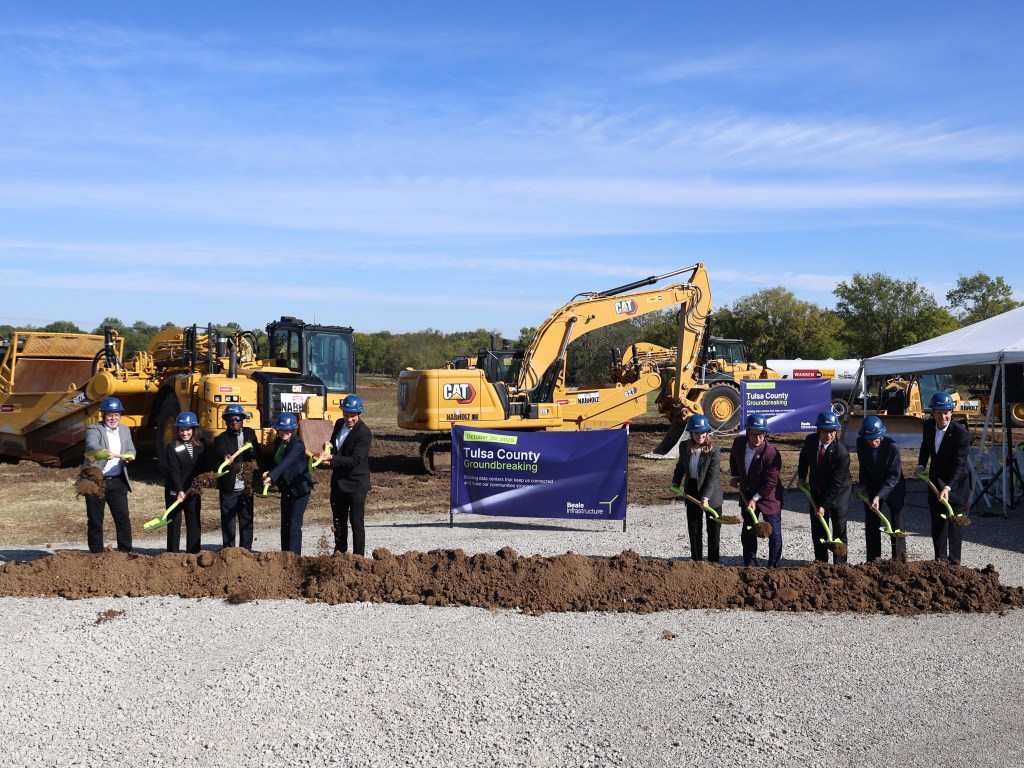
City and state leaders broke ground on the $1 billion project last month. It is one of several planned data centers causing a stir in the Tulsa community. Residents have mobilized through Facebook groups to raise awareness.
That is how neighbors learned Clydesdale’s developer is working with a third-party company to inspect nearby homes before heavy construction begins. Sauls Seismic, an Alabama-based company, is offering free inspections to homes and businesses within 600 feet of the construction site, according to a statement from Jesse Boudiette, a public relations consultant working with Beale Infrastructure.
“As required by Oklahoma state law and out of care for the community, and our desire to keep everyone informed, our Project Team has sent out letters of notification to any resident within 600 (feet) of proposed blasting locations,” reads Boudiette’s statement.

According to the letter sent to those neighbors, Sauls Seismic was hired to conduct “preblast inspections” on nearby structures, including taking video and pictures inside and outside to document preexisting conditions.
The letter does not elaborate on the blasting process but refers anyone with concerns to www.explosives.org. According to that site, blasting is used to remove solid rock formations during construction. It can cause noise vibrations and flying debris that can impact nearby structures.
Boudiette says blasting will occur only during daylight hours and will be limited to one or two blasts per day.
“Every precaution will be taken and the risk is low,” reads Boudiette’s statement. “The notification and pre-blasting surveys are actually a protection for homeowners in the unlikely event of damage so they can seek appropriate compensation.”
Barbara DeVries lives not far from the 500-acre data center site. She didn’t receive a notice — but her neighbor four homes down the road did. Hers is one of about half a dozen homes on the north side of 82nd Street North that did not receive the notice because they’re just outside the blasting radius.
Instead, DeVries says, she heard about the notices in a neighborhood Facebook group.
“I think it is ridiculous. The division between getting (an inspection) done and getting it not done is a 20-foot-wide road. If a neighbor 20 feet away across the street is feeling any issues, we are going to have the same thing,” DeVries said.
Hill’s address is listed in the property’s rezoning application, but he didn’t get a notice either.
His main concerns were with water and electricity use and what impacts, if any, they’ll have on his utility bills. But now Hill has questions about the construction — and blasting — process too.

“I’m sure that is just so they offer an opportunity so (the developers) minimize their liability later,” he said. “You can’t say ‘my foundation shifted and there are cracks in this, and you guys did it.’ I can understand why they would do that, but we did not receive any of that.”
Beale Infrastructure is also behind Project Atlas, a 200-acre data center in Coweta. Nearly 100 people attended a community meeting in October, some with protest signs. That project is still making its way through the approval process.
News decisions at the Tulsa Flyer are made independently of our board members and financial supporters. Read more about our editorial independence policy here.