

Tulsa is an emerging player in what experts are calling the latest technological race, leading the state with 27 data centers — compared to Oklahoma City’s nine — and more to come as public officials cheer billion-dollar investments in new centers.
“The biggest things that attract data centers are good network connectivity. The second is energy affordability, really cheap electricity,” said Dan O’Brien, senior modeling analyst at Energy Innovation, an energy and climate policy think tank.
O’Brien says states that have invested in what he calls “cheap electricity capacity,” such as wind and solar, are drawing data centers left and right. That’s one of the reasons, he says, Oklahoma finds itself with so many new proposals.
“Oklahoma is one of the leaders in wind, for example, in the country,” O’Brien said.
Lt. Gov. Matt Pinnell adds water to that list. Speaking to the Flyer last month, he said the state’s abundant water supply is a major attraction for data center development.
“Oklahoma is very blessed when it comes to water resources,” Pinnell said. “That is another reason why we are a very popular state when it comes to data centers is, we got a lot of water. We got a heck of a lot of more water than the state of Texas does.”

Real estate investment firm CBRE also points to Tulsa’s low energy costs, affordable land, tax incentives, friendly business environment and proximity to major business hubs in neighboring states as big draws for data center companies.
But some of those same resources are at the heart of Tulsans’ questions about the speed at which data centers are being approved and built here.
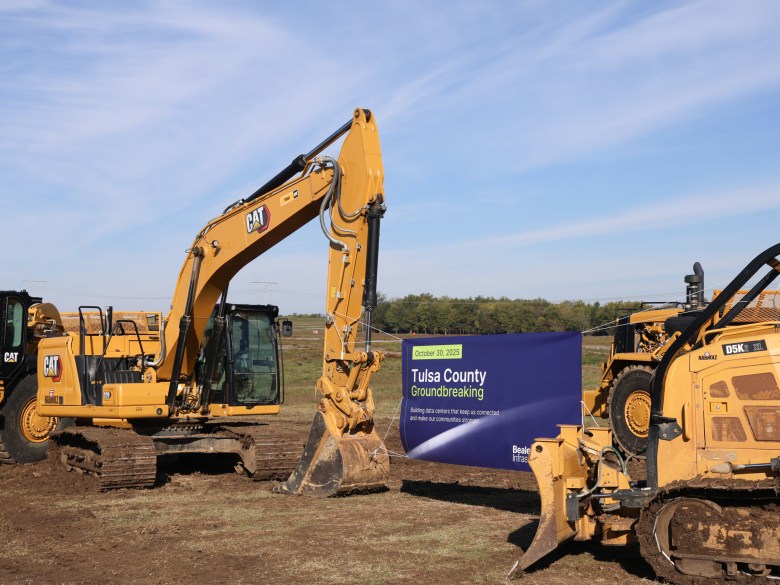
Tulsa County officials broke ground on a $1 billion data center, known as Project Clydesdale, near Owasso Oct. 30. Developer Beale Infrastructure held an open house earlier that week for Project Atlas — another large-scale data center slated for construction in Coweta.
The idea behind an open house, developers said, is to increase transparency for residents who bring their questions about the impacts data centers will have, including on residential water and energy use.
Darren Blanchard, a 42-year-old farmer from Mounds, attended the Coweta open house last month. He’s gone to several events concerning Project Clydesdale and Project Anthem — a proposed $800 million, 340-acre facility in east Tulsa.
“With data centers, what we have to realize is there are three things that are going to affect everyone. And that is the three topics of land, water and power,” Blanchard said.
Like other residents, Blanchard is concerned large-scale data centers will cause utility rates to increase. But private non-disclosure agreements have kept residents in the dark about possible impacts that developers identified in their own studies.
In some places, secrecy led to data center proposals being rejected — like Amazon’s proposed mega data center in Tucson, Arizona. The developer, who is also behind Projects Clydesdale and Atlas in Oklahoma, found a way to press forward with the project, but tension remains among local officials against it.
Jordan Gerow, policy and research director for climate policy group Climate XChange, says residents don’t want their utility costs to increase, so data centers must cover any rate increases prompted by spikes in electric and water usage.
“Getting data centers on their own tariff and to pay their own costs is a foundational policy that we are seeing in states that are most heavily impacted by data center development,” Gerow told the Flyer.
Pinell has watched new data centers sweep across the central U.S., with Virginia becoming “Data Center Alley.” We will get a clearer picture of what it looks like for Oklahoma to join the data center race over time, Pinell said. But he believes they will ultimately spark job creation and increased revenue for the state.
“But, the big but, is how many (data centers) can we have,” said Pinnell. “I am not talking about lining every street with a data center. But I do want to have some of that infrastructure in the state. It helps diversify our economy.”
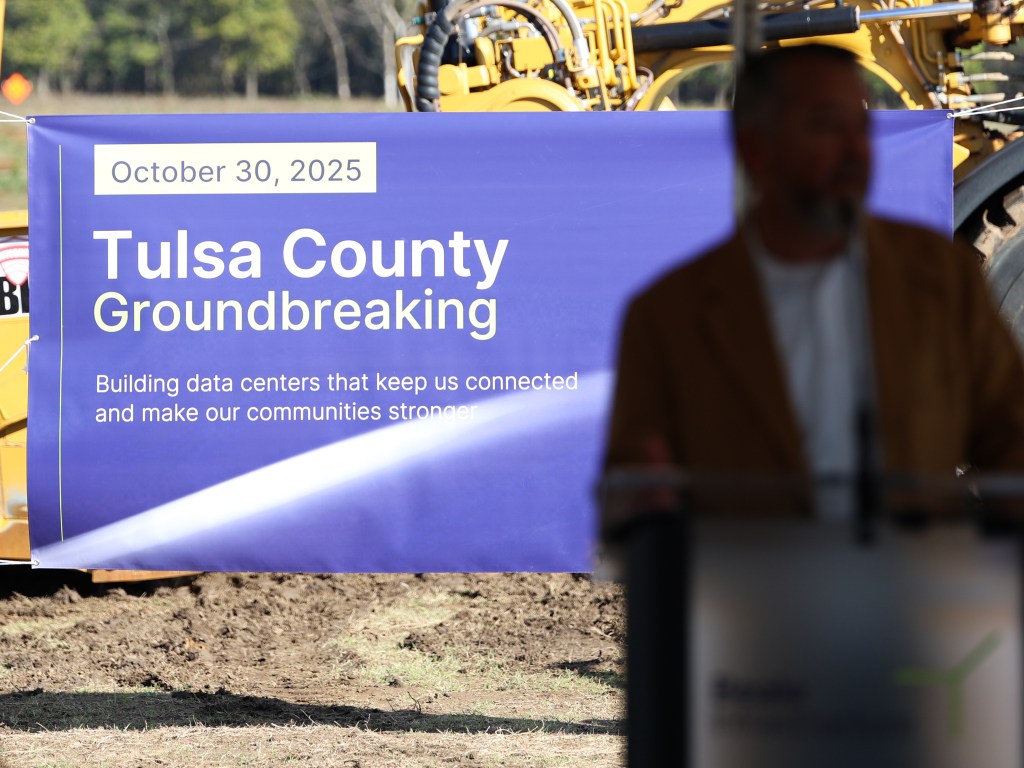
State Rep. Amanda Clinton, D-Tulsa, led an interim study on proposed data centers last month. She found many tech companies are bypassing the state and directly seeking out local municipalities for data center projects.
“These companies are specifically approaching cities like Coweta, Tulsa and Owasso,” Clinton said. “And they are working directly with the municipalities. The state does not truly have a hand in this. The state has, I would say, a very light hand, if very little influence at all where these data centers want to locate.”
Clinton thinks more state oversight could help communities navigate the increasing number of data center proposals, particularly as city departments lack the resources to fully vet these projects.
Driven by the increasing use of artificial intelligence, data centers are a “reality” and here to stay, Clinton added.
“As cloud storage has advanced and particularly as AI has advanced very rapidly, that is what is driving the need for data centers,” Clinton told the Flyer. “As long as we want to enjoy our modern conveniences, data centers are going to be a piece of that.”
News decisions at the Tulsa Flyer are made independently of our board members and financial supporters. Read more about our editorial independence policy here.
