



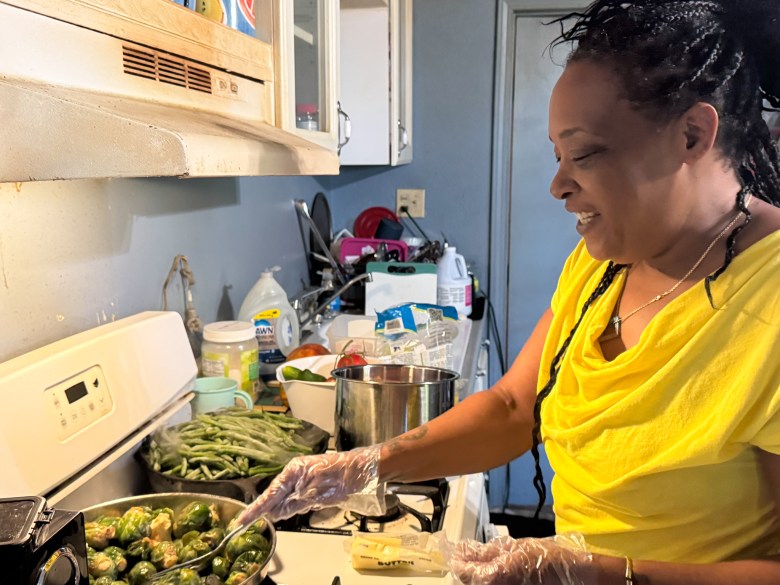
Brussels sprouts and green beans sizzle over a small, four-burner stove in Brandi Johnson’s kitchen — a one window room in her uncle’s modest 80-year-old house.
Johnson is in her element, cooking meals for anyone who needs one.
“I just don’t like the thought of somebody not eating for the day,” she told The Eagle.
Her mission to feed people started about five years ago when she worked for the Salvation Army. One day, she saw a homeless man rummaging through trash cans at a convenience store.
“People were coming out with snacks and coffee, and they weren’t asking him if he needed anything, myself included,” Johnson said. “I was pressed for time and needed to get to work.”
She said that moment essentially changed her life: “For the first time, I actually asked God what I should do. He said ‘feed them.’”
It started small. Johnson would drive around Tulsa handing out peanut butter and jelly sandwiches to people experiencing homelessness. But a car accident caused her to change her approach.
Now she relies on word of mouth and the Nextdoor app where she posts her menu. Offerings range from bowls of soup and spaghetti to inside out chicken egg rolls.
But feeding 50 to 80 people a week is something she can’t — and hasn’t — done alone. As Johnson checks the pots on the stove, her housemate, LaShele White, preps chicken and fruit.
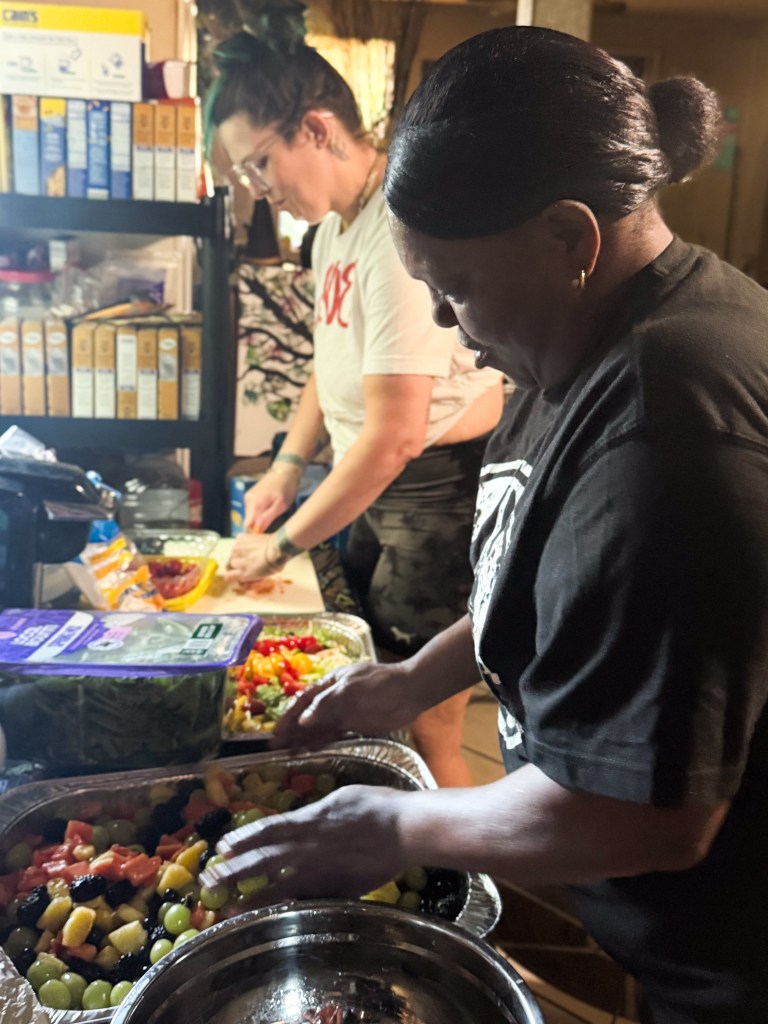
White moved in recently after losing four family members, including her mom, in the span of one month.
“This helps me a lot,” White said. “Like last night, I had a little bit of a meltdown. We were in here cooking, and then we were laughing.”
Help also comes in the form of donations. Johnson says she cooks whatever is given to her, including pounds of beef and bison. After catching 30 pounds of fish during a family lake trip, Eldon Kefir put out a call on Nextdoor to find someone who could take some of it off their hands. Kefir said Johnson’s name kept popping up.
“I didn’t know a thing about who she was or where she lived or anything,” he said. “But she was from the heart… not for recognition. She gets a lot of food to the right people.”
After four hours of cooking and packaging meals, Johnson, White and others take them to Springdale Park in north Tulsa. As she hands out food, Johnson also hands out them hand warmers, knit caps, thermal blankets and clothes she picked up from the Tulsa Dream Center.
On a recent Saturday, Almarinda Dickson stopped by to pick up a plate on her way to her job at a salvage yard.
“I can’t believe I walked up just when you got here,” Dickson told Johnson. “My husband and I live in a garage. We don’t have electricity or water but we have a roof.”
Johnson’s charity could have unintended consequences, though. Mack Haltom, CEO of the Tulsa Day Center, said he appreciates Tulsans stepping up to help their neighbors, but solving the larger issue of homelessness requires service providers who can provide more than meals.
“Let’s say Mary and John and their family moved here. How can I help them reintegrate? I have support staff that do that,” Haltom said. “We have stabilization case managers that follow up with these people, we work with you for over a year as part of the plan.”
His concerns grew in the aftermath of Operation SAFE. Tulsa homeless advocates decried the governor’s initiative to clean up homeless encampments on state property. They say it cost them crucial touch points with people experiencing homelessness.
But Johnson says part of what she’s trying to do is create community, even if it’s just for one hour a week.
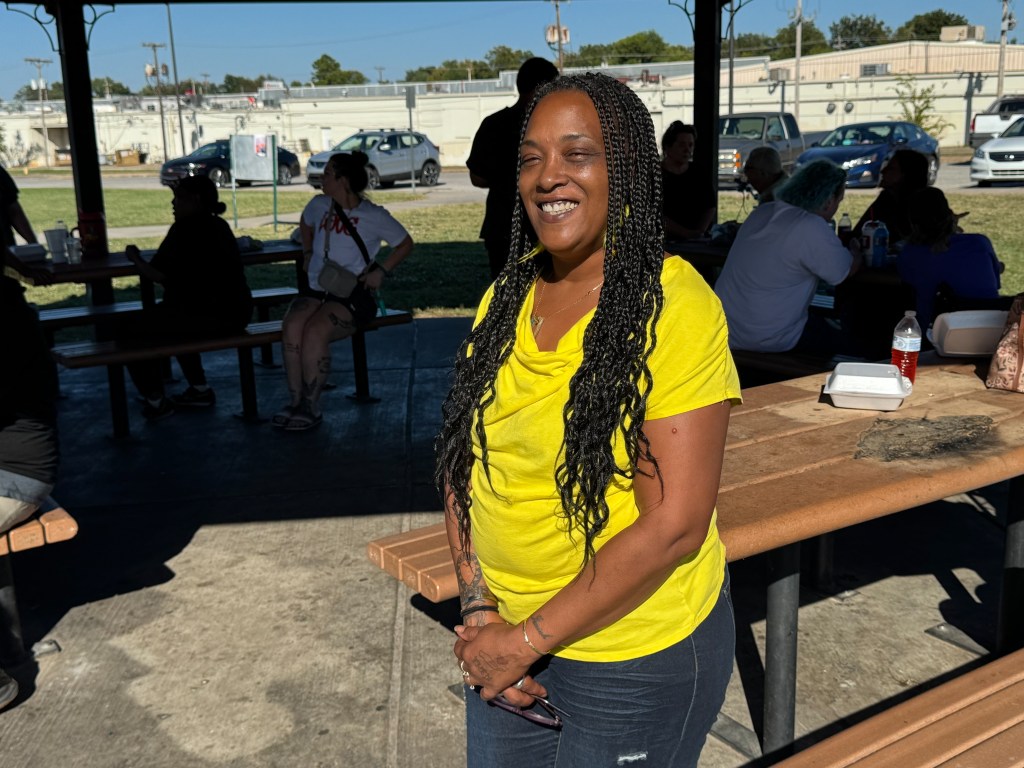
“It started with the homeless, but pretty much anyone can get a plate,” she said. “Whether it’s listening or building, cooking or baking, we all have something to offer.”
How long she keeps cooking remains to be seen. The need for community-driven generosity is likely to grow as the fate of SNAP benefits rests with Congress and the ongoing government shutdown.
Johnson’s dreams include getting a food truck so she can sell meals to help cover the cost of the free ones she provides. But ultimately, she hopes what she’s doing inspires others.
“If everyone did something for someone else, at least once a week, just out of kindness, to help them out, can you imagine what Tulsa would look like?” Johnson said. “Just one person, one family, but whatever you can afford to do. If we did that, nobody would be in the position they are in out here.”
