

Osage Nation’s executive branch outlined some of its plans to allocate language and culture programs to state public schools on Tuesday. The congress remains skeptical.
Addie Hudgins, director of the Wahzhazhe Cultural Center, told the Osage Nation Congress on Wednesday that she is overseeing a public school expansion program for the tribe. She outlined those plans at a culture committee meeting as part of the legislature’s Tzi-Sho session, where leaders are preparing its next fiscal year budget, which is due before Oct. 1.
The program would add an Osage-based curriculum to the neighboring Hominy, Pawhuska and Woodland public school districts.
The first year would be spent designing the curriculum, which Hudgins said would cost $250,000 to develop. It would include an Osage government course, she said, and her proposal would fund five new positions — a public school coordinator and four cultural specialists.
“It’s a plan to build a plan,” Hudgins said. “Once this budget goes through … whoever those designees are would start talking to those school officials to get those documents in place that need to happen.”
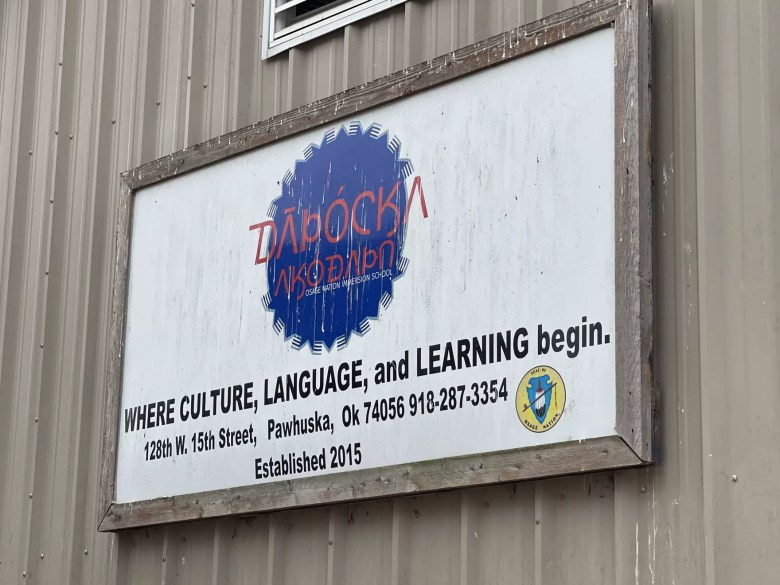
This approach is designed as an alternative language education program after Principal Chief Joe Tillman closed the tribe’s private language immersion school in August. Since then, Tillman has teased plans to implement Osage programming in Oklahoma public schools.
According to Osage Chief of Staff Andrea Kemble, those plans would expand language and cultural education to 500 Osage students, including those in elementary, middle and high schools.
Multiple high schools within Osage County already have Osage language classes available as curriculum meeting foreign language requirements.
“This is an opportunity for them to have this education in their educational environment,” Kemble told the congress Wednesday. “In my opinion, it is the responsibility of our government to share language and culture throughout all of the districts as far as we can reach.
“Nobody, regardless [of] comments, is targeting language and culture programs in a demeaning manner. That is not true.”
But the idea to implement culture into public schools was met with debate.
Congresswoman Jodie Revard said she is uncomfortable with teaching Osage culture to non-Osage students and suggested Tillman’s administration take time to develop a full plan.
Hudgins responded to her concerns, saying that’s why the plans would include an Osage government course rather than a full-blown cultural one.
“I feel like it’s important for all the people in the community around here. I mean, it’s good for them to understand our government,” Hudgins said. “It’s not for me to tell you or you or you how to do your culture … I learned how to be Wahzhazhe from my family, and that’s how I feel all Wahzhazhes should learn how to be Wahzhazhe.”
“Wahzhazhe” is the original, traditional name of the Osage Nation and its language.
Revard said she would like to see more education over the Osage government taught within the tribe.
“You’re trying to capture 500 people. We have 500 people,” Revard said. “Why not throw your dollars inwards instead of outwards. Teach your own people the language.”
Congresswoman Angela Pratt, the culture committee’s chair, said she is concerned about funding a program the public school districts may not approve of.
“We’ve been here all this time and none of them, none of the schools that I know of had said, ‘Hey, we just want to know more about your culture,” Pratt said. “I mean, we all know half of them still don’t even want us here.”
Vann Bighorse, Osage secretary of language, culture and education, said once the funding is approved, the administration will seek a memorandum of understanding with the school districts.
Congressman Billy Keene questions how long the process will take, citing uncertainty within the state government.
The situation at Osage Nation
Osage Nation’s ongoing budget discussions have been rocky, with friction arising between the executive and legislative branches.
In early August, Tillman announced Daposka Ahnkodapi would close, along with the tribe’s visitors center and Harvest Land farm. He wrote the tribe saw a projected financial shortfall around $38 million and issued a state of emergency.
He also recommended parents enroll their children in Pawhuska Public Schools, which extended its enrollment deadline by an extra day.
But the Osage Nation Congress denied the tribe was experiencing a budgetary crisis. And last week, it authorized an investigation into Tillman, questioning whether his recent administrative actions constitute malfeasance. The outcome, members said, would determine whether or not impeachment is a viable option.
Tillman denied the allegations, saying they were “without merit.”
The Osage Nation Congress also floated the idea of creating a public charter schoolthat would implement language and cultural immersion. But such a process would likely take years to develop.
This story was produced as part of a partnership between the Tulsa Flyer and KOSU.