

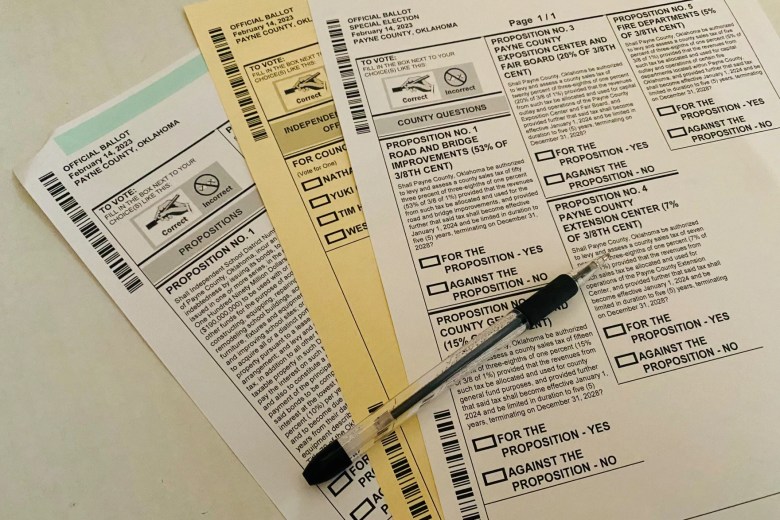
A dozen new Oklahoma laws are in effect as of Jan. 1. One aims at simplifying election participation in the state.
Written by Senate Pro Tem Lonnie Patxon, R-Oklahoma City, and Rep. Mike Osburn, R-Edmond, Senate Bill 652 limits the number of Oklahoma yearly election dates to five. Those would be held on specified Tuesdays in February, April, June, November and December.
“By streamlining our elections to five set dates each year, we create a more predictable system for voters, election officials and local governments,” Paxton said in a late-December press release.
The law technically took effect in November, but its changes to Oklahoma elections start this year. And it’s likely to have an outsized impact compared to many other new laws, because it affects every level of political jurisdiction that holds elections in Oklahoma and every registered voter in the state.
Per the new law, the new designated election dates for any year are as follows:
- The second Tuesday of February.
- The first Tuesday of April.
- The third Tuesday of June.
- The first Tuesday (after the first Monday) of November.
- The second Tuesday of December, starting in 2025, and every four years thereafter.
Elections that land on a holiday will be pushed to the following Tuesday.
The governor sets dates for special elections in Oklahoma; the new law generally limits his choices to one of those five Tuesdays. But it also maintains flexibility for some circumstances, laying out another set of possible election dates if certain elected offices become vacant, a ballot initiative is put before voters or a national or state emergency requires an election.
Those dates include:
- The second Tuesday of January in any year.
- The first Tuesday of March in any year.
- The first Tuesday of May in odd-numbered years.
- The second Tuesday of July in odd-numbered years.
- The second Tuesday of September in odd-numbered years.
- The first Tuesday of October in odd-numbered years.
- The second Tuesday of December in any year.
In the same press release, Osburn seconded his Senate counterpart on the benefits of the new law.
“This reform provides relief by creating a predictable schedule that saves time, reduces administrative strain and helps counties better steward taxpayer dollars,” Osburn said.
“By modernizing our election calendar to be clear and consistent, Oklahomans can more easily participate in elections and make their voices heard.”
Some of the other new laws include House Bill 1792, a reclassification of all state felonies into 14 levels of severity, and House Bill 2610, a tax credit on things like attorney and court fees for adopting parents, among others.
This article was originally published by KOSU. You can see the original story here.