
Benefits from the Supplemental Nutrition Assistance Program, or SNAP, are to be cut off this weekend if the federal government shutdown drags on.
Because of the looming SNAP suspension, tribal and state governments, nonprofits and religious organizations are working to fill in the gaps.
Comanche Nation Chairman Forrest Tahdooahnippah says the tribe has a plan to make sure people are fed during the government shutdown. But he hopes it won’t have to be used.



“Hopefully the government will figure out how to take care of its people,” Tahdooahnippah said.
Tahdooahnippah said he views the federally funded program as the U.S. government’s obligation, but the tribe is stepping in while the federal government is at a standstill.
The Comanche Nation has reallocated money to provide food vouchers for Comanche citizens affected by the shutdown — $75 for individuals and $150 per household. The vouchers are available for SNAP recipients who lost their benefits or for government workers who are furloughed or working without pay.
Depending on how long the shutdown lasts, Tahdooahnippah said the nation will be assessing demand and keeping an eye on available resources on a monthly basis. The shutdown, he said, impacts the nation in multiple ways beyond food aid.
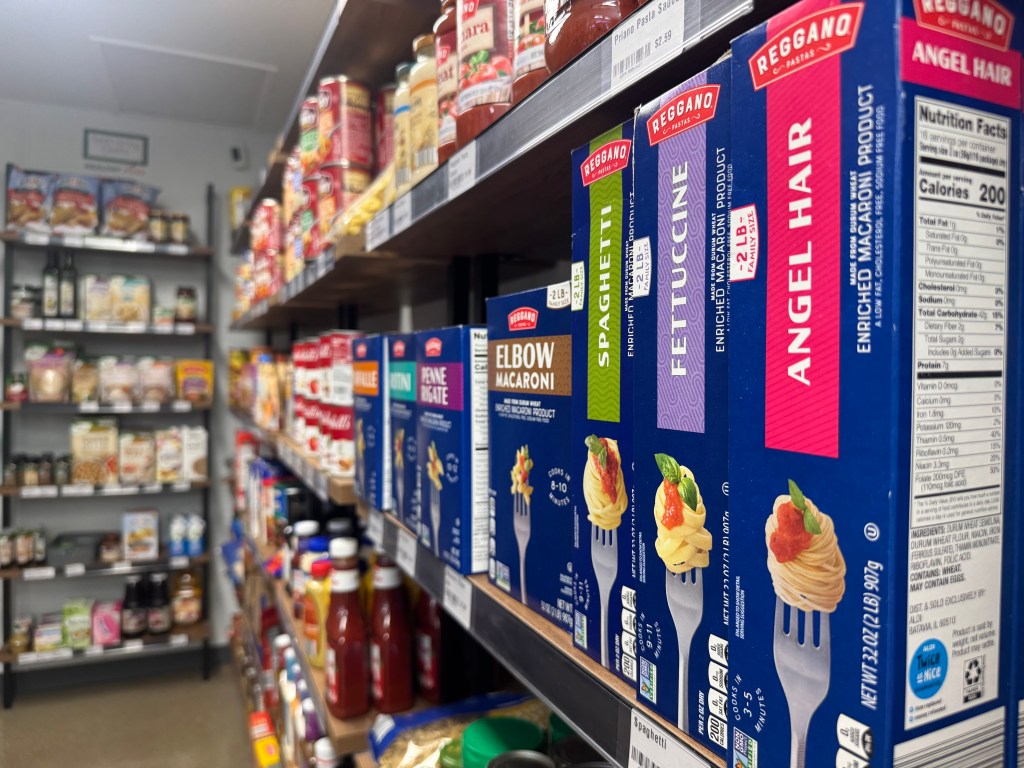
Officials were already planning on establishing a food pantry because of increased food insecurity over the past few years. He said the lapse accelerated this work and provided a push to keep it better stocked, including game meat from hunters.
“I’ve been really impressed by the local business community and just the local community in general, even individuals that have been willing to step up and make donations or assist with food drives and that sort of thing,” Tahdooahnippah said. “It’s a tough situation to be in, but it just shows the compassion and generosity of everyone in southwest Oklahoma.”
- Are you a SNAP shopper? KOSU wants to hear from you. Share your story at news@kosu.org.
Nonprofits seek to provide up-to-date info
SNAP is the nation’s largest food aid program and nationally, children and people over 60 make up the majority of participants in fiscal year 2023, according to the U.S. Department of Agriculture.
About 685,000 Oklahomans depend on the program to afford groceries in one of the most food-insecure states in the nation.
Chris Bernard, CEO of Hunger Free Oklahoma, said organizations statewide are coordinating how to strengthen existing efforts and move to an emergency response.
“…Because that’s frankly what this will be, right?” Bernard said. “You’re talking about an unprecedented loss of resources overnight, right? More than 70% of the food safety net will disappear on November 1. And that’s never happened before – ever.”
The unprecedented benefits lapse has left many SNAP recipients confused about what support is still available to them. Bernard said Hunger Free Oklahoma is working to provide up-to-date information. For instance, the program’s participants will be able to use leftover October benefits next month.
Another program, Double Up Oklahoma, encourages SNAP recipients to buy fruits and vegetables. For every SNAP dollar spent, it will be matched up to $20 per day to purchase produce.
If SNAP benefits end Saturday, Bernard said Double Up dollars can be spent for 60 days after being earned. So, shoppers can spend their Double Up dollars past the Nov. 1 deadline if they were earned in September or October.
The Regional Food Bank of Oklahoma is aiming to double its distribution each month the shutdown lasts, which would cost an additional $5.5 million, and is continuing to accept donations and volunteers. The Food Bank of Eastern Oklahoma has a similar plan.
Religious leaders are also encouraging churches to step in to collect donations.

Oklahoma looking at options
On Wednesday, the Cherokee Nation issued a state of emergency to combat food insecurity ahead of the benefit cutoff. Cherokee Nation Principal Chief Chuck Hoskin Jr. said the nation will use $6.75 million in emergency relief funding and called upon the state to tap into its $3.6 billion surplus.
“I applaud the governor and other state leaders for amassing this multibillion-dollar fund from the people of this state,” Hoskin said in a statement. “Now is the time to use it to help the people of this state.”
At a press conference, Gov. Kevin Stitt said Congress needs to fund the government and food assistance is not the only program being impacted through the shutdown.
“But at the end of the day, big picture, the federal government needs to — they need to quit fighting,” Stitt said. “They need to solve this problem. They need to fund this clean CR (continuing resolution) and stop throwing politics into it and trying to throw other policy items into this.”
Stitt, alongside state department heads, nonprofit officials and religious leaders, encouraged
Oklahomans help their neighbors and shop locally because grocers rely on SNAP dollars.
He said the state is financially strong, but using rainy day funds to fill the gap is complicated. If the state uses them or pulls from other funding sources, Stitt said, the federal government is not likely to provide a reimbursement.
“So before resorting to rainy day (fund) we’re going to beef up other programs that we have,” Stitt said.
Some Oklahoma legislators are calling for a Special Session to provide temporary state funding to support the SNAP.
For public school students, free and reduced school meals are still available. Oklahoma Department of Education officials are encouraging families who could be losing their benefits to apply for school meals now.
As well as relying on other programs to help, Stitt said they are working with the state legislature to understand options if the shutdown lasts.
On Wednesday, the Cherokee Nation issued a state of emergency to combat food insecurity ahead of the benefit cutoff. Cherokee Nation Principal Chief Chuck Hoskin Jr. said the nation will use $6.75 million in emergency relief funding and called upon the state to tap into its $3.6 billion surplus.
“I applaud the governor and other state leaders for amassing this multibillion-dollar fund from the people of this state,” Hoskin said in a statement. “Now is the time to use it to help the people of this state.”
At a press conference, Gov. Kevin Stitt said Congress needs to fund the government and food assistance is not the only program being impacted through the shutdown.
“But at the end of the day, big picture, the federal government needs to — they need to quit fighting,” Stitt said. “They need to solve this problem. They need to fund this clean CR (continuing resolution) and stop throwing politics into it and trying to throw other policy items into this.”
Stitt, alongside state department heads, nonprofit officials and religious leaders, encouraged
Oklahomans help their neighbors and shop locally because grocers rely on SNAP dollars.
He said the state is financially strong, but using rainy day funds to fill the gap is complicated. If the state uses them or pulls from other funding sources, Stitt said, the federal government is not likely to provide a reimbursement.
“So before resorting to rainy day (fund) we’re going to beef up other programs that we have,” Stitt said.
Some Oklahoma legislators are calling for a Special Session to provide temporary state funding to support the SNAP.
For public school students, free and reduced school meals are still available. Oklahoma Department of Education officials are encouraging families who could be losing their benefits to apply for school meals now.
This article was originally published by KOSU. You can see the original story here.